Industrial safety isn’t just a line-item in a company’s to-do list anymore — it’s a guiding principle that touches how organizations protect their employees, their operations, and their reputations. In a time when industries are evolving with increasingly complex machinery, automated systems, and environments of ever higher risk, safety is more than something to check off a list; it’s a cultural element that needs to flow through everything you do.
The Importance of Industrial Safety and Challenges to Turn Around This blog discusses the significance of industrial safety, the best practices that companies should implement, and the part that technology can play in creating a safe, productive, and future-ready work environment.
Why Industrial Safety Matters
Thousands of such accidents happen on a yearly basis across industries including manufacturing, construction, oil & gas, logistics, and mining – to name a few. They may be minor incidents, or can include fatalities, and a lot of financial and reputational damage. There are a number of reasons why industrial safety is important, such as
- Human Life Protection – The employee’s health is the one place you can’t afford to mismanage. Safe workplace work means workers are getting home safely.
- Productivity Improvement – Accidents cause disturbance in work. Stop them and you retain a predictable, smooth work flow.
- Cost Saving – Compensation claims, legal fights and medical bills result out of workplace mishaps. It takes a lot of these financial burdens off safety.
- Compliance with Laws – Occupational health and safety (OHS) standards are mandated by government and international organizations. Fines for non-compliance can be substantial.
- Trust Building – A safe place generates worker, investor, and customer confidence.
INDUSTRY HAZARDS
The working environments of industry are full of hazards. Recognizing hazards is the beginning in avoiding injuries. are the most frequent:
- PHYSICAL HAZARDS: Machinery, moving parts, and heavy equipment.
- CHEMICAL HAZARDS: Toxic fumes, spills, and flammable materials.
- ELECTRICAL HAZARDS: High-voltage equipment, live wires and poor grounding.
- ERGONOMIC HAZARD: Work environment (or training) is badly designed, causing muscle or bone aches.
- IGNITABILITY EVENTS SOURCES OF FIRE: Ignition sources – combustible materials – fire fighting deficiencies.
- BIOLOGICAL HAZARDS: In some industries there can be an exposure to bacteria, virus or other pathogens.
Developing a Culture of Safety Building a Culture of Safety
An effective safety program is more than in writing—it is in building a culture where safety comes first. This process involves the participation of employees and the commitment of management.
The following steps help you to build a safety culture:
- Commitment from leadership-Safety begins with leadership. Leaders need to establish well-defined safety expectations and demonstrate safe behaviour.
- Employee Training- Continual, regular safety training serves to educate workers on safety procedures, how to respond to emergencies, and raises their awareness of hazards.
- Effective Communication-Safety instructions, hazard warning and emergency procedure need to be well communicated.
- Reporting Incidents – Without fear of reprisal, workers should feel empowered to report hazards and near misses.
Safety auditing and inspections should be ongoing affairs, with continual development as results come in.
Technology and Industrial Safety
The energy revolution must not come at the expense of worker wellbeing. But then there are also things that are now possible that weren’t possible before and organizations are using more sophisticated means to keep workers safe and reduce risk.
Automation & Robotics – Eliminate or minimize human exposure in hazardous processes.
AI-Enabled Monitoring – Use of predictive analytics to detect hazards before they cause harm.
Wearable Technology – Intelligent helmets, safety vests and sensors that identify the presence of toxic gases or fatigue.
Virtual Reality Training – Such simulated environments enable employees to engage in emergency drills.
Digital twins- duplicating physical industrial processes to validate safety measures.
For example, safety video animation is an easy way for companies to train employees since it helps them visualize actual situations without putting them at real risk.
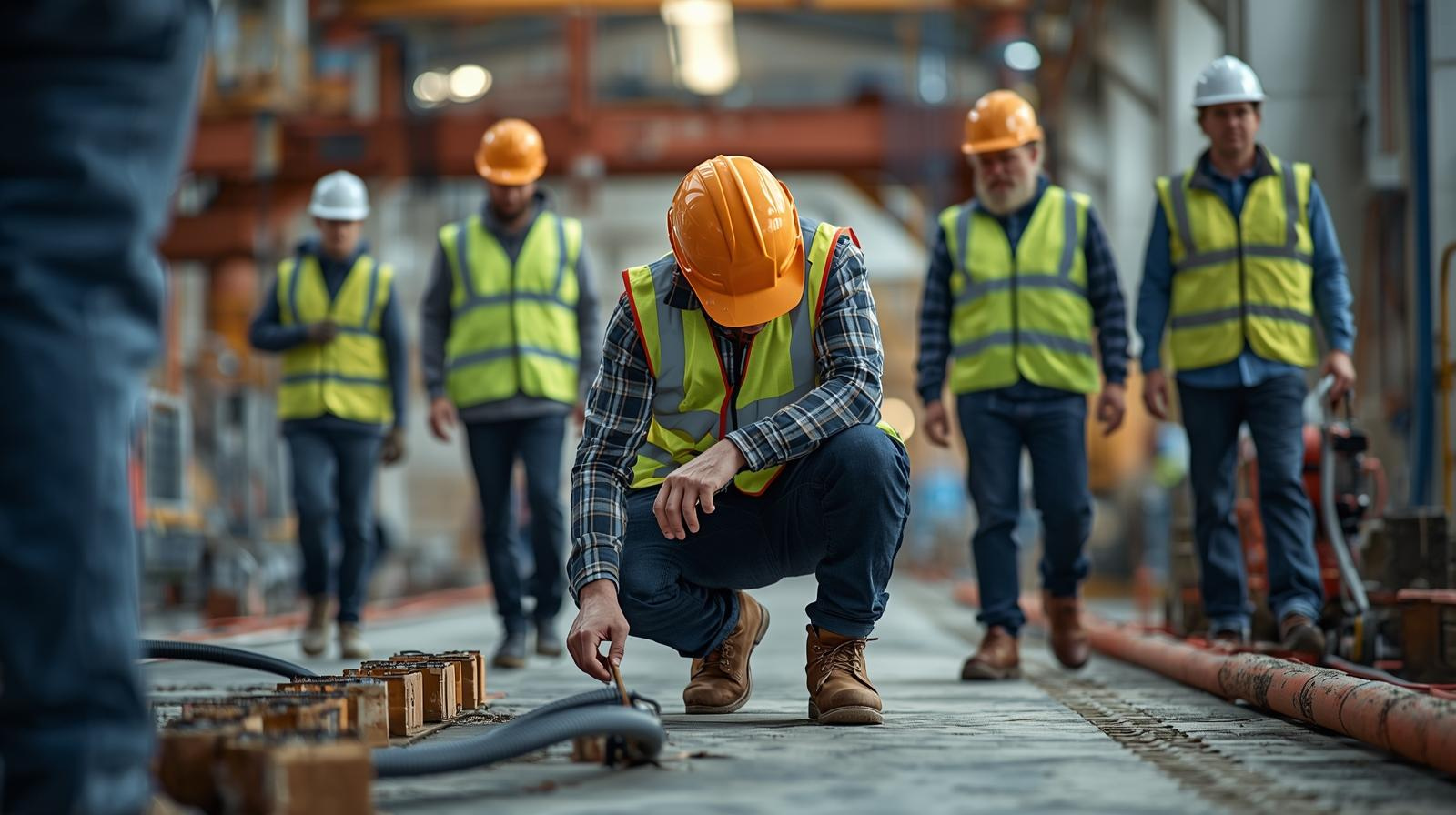
Safety Management Systems
A structured safety management system (SMS) is required in all sectors of the industry. This system recognizes, assesses, and manages risks and fosters a culture of accountability. Among the key elements are:
Among the key elements are:
- Hazard Identification & Risk Assessment-Comprehensive risk assessment of the company as a whole.
- Policy & Procedures-Written procedures for emergencies and for normal operations.
- Monitoring & Reporting-Frequent monitoring of incidents, audits and compliance.
- Corrective Actions-Root cause analysis and prevention of recurrence.
Good safety management leads to a holistic approach where culture of safety becomes the fabric of an organization.
Best practices in Industrial Safety and Health
“Best practices” for maintaining a safe work environment for Strata-connected companies are:
- Routine Safety Drills – Preparedness for Fire, chemical spills, and equipment malfunctions.
- Protective Equipment (PPE) – Helmets, gloves, glasses, and respiratory protection. Emergency shut-off mechanisms and physical barriers are also part of machine guarding. The Creative Side of Safety Training
META-POPULAR (1-5%) laid out you include:
- Workplace ergonomics: Reducing repetitive strain injuries at work through good workplace design.
- Mental Health Initiatives: Workers’ stress and fatigue management.
Today, businesses are using 3D product animation services to demonstrate equipment handling, maintenance, and accident prevention in a more engaging way. Employees understand better when safety protocols are presented through interactive visuals rather than long manuals.
Industrial Safety – Its Future Direction
The future of industrial safety involves a synthesis of human dedication and technological advances. With the pace of industries changing towards automation and digital transformation more roles of predictive analytics, ai driven monitoring, immersive training will increase.
Safety-conscious companies that make safety an investment and that maintain a safe workplace not only have fewer accidents, but they also develop a workforce that is resilient in the face of adversity.
